The Easter Bunny Don’t Rise from the Dead

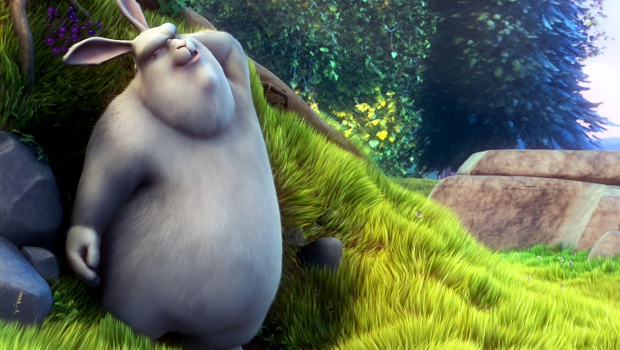
copyright Blender Foundation at www.bigbuckbunny.org

So I was driving and noticed some signs by the side of the road. One said “THE EASTER BUNNY” and the next said “DON’T RISE FROM THE DEAD.” Fascinated, I slowed to read the signs sprinkled over this church’s yard. The signs urged me to come to Easter Sunday services rather than indulge in candy and plush bunnies. I am so kicking myself for not snapping a picture of the signs, especially because someone snagged the signs later, so it just read “THE EASTER BUNNY.”

Dear readers, it is not my wish to offend any religious folks, but how can I resist such obvious fodder? How can I NOT write about the Easter Bunny rising from the dead now that I’ve seen those signs?

So Happy Easter. Dave called this “inadvertently religious, while still blasphemous.” 

—————
One moment, Gustav the Bunny was rotting peacefully in the ground, conscious of nothing. The next, he was clawing at the dirt, uttering little rabbit squeaks roughly translated as “Help! OMG! Brains!”

The Bunny Had Risen, and it was Easter Morning.

Gustav discovered that on top of stinking to high heaven (he worried that God would strike him down for this offense, then realized that it didn’t matter, as he was already dead), he had two new unusual talents:

a) Mysteriously increased intelligence
b) His ears had become dispensers for brightly colored boiled eggs

Terrified, he stumbled through the cemetery and into the adjoining church, dropping eggs everywhere. People screamed, leaping to their feet and upsetting hymnals. A handful of brave eight-year-olds ignored his musty demeanor and scattered after the eggs, diving under pews and knocking over collection plates. The more practical children in the group pocketed both eggs and donations.

Poor Gustav! All he wanted was to go back to the grave, or perhaps to consume tasty rabbit brains. He gagged at the thought of the humans’ tough gray matter, instead relishing the tender tiny morsels of bunny brains. Then he shook his head, ears flapping and eggs flying. What was the matter with him! Rabbit brains indeed! The church was a nightmare of screams and polyester pantsuits.

“It’s from the devil!” moaned the pastor’s wife.

“Oh my Lord, it’s a zombie bunny!” shouted the youth choir director, his soaring tenor nicely contrasting with the chorus of shrieking twelve-year-olds.

“It’s gonna eat our brains!” wailed a Sunday school teacher.

The Easter Bunny did not rise from the dead!” hollered the pastor, pounding his pulpit. “It is a symbol of sinful heathen fertility! You are all … um …having a shared hallucination!”

Silent, the crowd stared at Gustav, unwilling to associate his mangled zombie body with anything remotely like fertility. Gustav himself had zero interest in being fertile. The thought of eating bunny brains was much more appealing.

“Start thinking about Jesus now, and banish this unsightly apparition!” ordered the pastor. Annoyed at this insult (unsightly? The nerve of that man!), Gustav twitched an ear and lobbed an egg at him. At precisely this moment, the crowd’s determined focus on Jesus caused the Messiah to appear.

“What’s going on?” demanded Jesus in an unearthly beautiful voice.

“It’s … it’s Easter, my lord,” stammered the Pastor.

“Oh.” Jesus scratched his beard. “It’s that time already, is it? Being divine and all, I sometimes forget that my flock likes to celebrate anniversaries. To a Divine Being like myself, time is irrelevant. But why all the screaming? I didn’t think Easter was a screaming sort of holiday.”

Unable to speak due to their supreme awe at being in Jesus’ presence, the congregation could only point at poor Gustav, who cowered in a corner.

Jesus groaned and ran his hand through his hair, which was, of course, perfectly glossy and thick. “Satan!” he called. “Is this some kind of joke?”

“YES,” boomed a voice from the ground. “AND I AM AMUSED.”

The crowd huddled together, overwhelmed with awe and fear. Gustav wondered if the mysterious creepy voice came from a rabbit. A rabbit with brains. Brains that he could easily crush and extract using–

“A zombie rabbit, Satan? Seriously?” Jesus sighed.

“YES.” The smell of sulfur rose from beneath the pulpit. “JUST BECAUSE YOU HAVE NO SENSE OF HUMOR IS NO REASON TO CRITICIZE MY CLEVER ESCAPADE.”

“You’re Satan. You don’t have escapades,” Jesus advised. “Now I’m going to send this poor bunny back to the grave and remove his unnatural intelligence.” With a snap of his fingers, Gustav was once again unaware and inanimate, the awful craving for bunny brains extinguished. And because he was dead, he didn’t see the aftermath in the church, which included Jesus unboiling the eggs and refusing to sign autographs.

Undeterred, most of the children went home to eat chocolate Easter Eggs and Peeps. The pastor, never one to allow deviations in his grip on reality, soon convinced the congregation that it was all a shared hallucination brought on by religious ecstasy.

Satan simmered quietly in his fiery lair of pain and damnation. Jesus was always spoiling his fun! But he soon straightened and smiled. Christmas was not far off and this time, he had elves of his own.
0no comment
Uncategorized,

Emilio the Wombat and the Fearsome Pez Dispenser

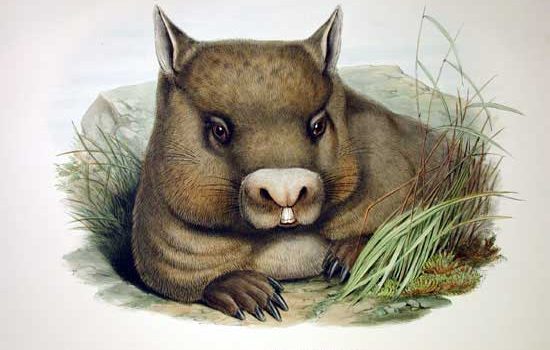
Drawing of a wombat eating grass

Once upon a time, there was a wombat named Emilio. Emilio was a very special wombat because his nose contained a Pez dispenser.

He realized that normal wombats did not have candy factories in their noses. The deformity resulted from a cruel experiment by Carnivorous Confections, Inc. When he was a young marsupial, he’d been captured by mercenaries and subjected to bizarre and seemingly pointless interrogations and sugar experimentation. Early in his imprisonment, Emilio recognized the deep insanity of his primary captor, Dr. Winifred, Carnivorous Confection’s lead scientist. Winifred, a slight man who smelled of sheep’s milk, would stalk around the animal experimentation lab, rattling the cage bars and shrieking, “Admit to the divinity of sucrose! I know you are in contact with It, you foul, furry lumps of flesh! Convey my messages to the Divine Web of Sweetness at once! Why are my requests not granted? What is preventing their transmission?” His frantic, menacing eyes would appear at Emilio’s cage as if estimating his animal capacity for deceit. “Yes, yes,” Winifred would mutter. “Yes, I’m sure you’re the one …”

At first, during the long, fluorescent-lit days of his captivity, Emilio feared Dr. Winifred and his mystifying insistence that there was Sugar God accessible only by marsupials and small mammals. But soon the man’s unexpected rampages became a source of amusement. The other animals (three rabbits, seven rats, a hamster, a carpet python, and a pair of surly kangaroos) were relieved to see someone else taking the heat, and Emilio’s good-natured perseverance endeared him to the group. He entertained the other inmates with a list of Winifred’s accusations, which he memorized and performed during the man’s lunch breaks.

“Filthy marsupial of pestilence!”

“Infidel, you deny me nirvana!”

“Despicable, treacherous wombat! Your insolence will not go unpunished!”

“You withhold the sacred pleasures of sugar, and you shall be made to reveal them!”

“I shall place a Pez dispenser in your nose, fiendish pile of fuzz!”

This last one was a great joke among the lab animals at first. Then one day Dr. Winifred entered the lab with a gurney and a tranquilizer gun. He began shuffling about the room, spraying disinfectant and chortling. This behavior was nothing unusual, but then Emilio noticed the old lunatic was clutching a pack of brightly colored Pez dispensers with Tweety Bird heads. Winifred’s skinny arms reached into the cage and clutched the back of Emilio’s neck,  and immobilizing him as he deftly measured Emilio’s nose with one hand.

This was not a good sign.

“Bite him!” squeaked the hamster, but he could not reach Winifred’s hand. He stared at the garish Tweeties through their plastic packaging. They returned his gaze coldly.

He felt the needle’s sting and sunk into a drugged haze, dreaming of narwhals swimming gracefully in a torrential sea.


When he woke, he reached up and felt hard plastic embedded in his nasal cavity. He heard other animals gasp as he raised his head. The youngest rabbit snarled in terror.

The old lunatic had done it. Emilio’s prominent wombat nose had been replaced by one of the Tweeties!

He could have collapsed then, and given in to the fear and despair. Instead, Emilio shouldered the burden of deformity and resolved to focus on whatever new abilities he had. He would not be beaten by a crazed scientist obsessed with a non-existent deity!

He realized that Winifred must have not only implanted the Tweety, but also altered Emilio’s DNA structure by adding genetic code for candy-secreting enzymes. Emilio realized that if he twitched his tail to the left a few times, a Pez would appear in the Tweety’s mouth. It took him a few times to get the hang of it, but soon he was spitting candy at every animal in the room. They murmured their appreciation, all except for the python, who suffered from cavities. Emilio found that he did enjoy the scent of Pez, although he suspected the candy was a cheap knock-off brand. As they munched on generic Pez, the lab animals discussed the day’s events.

“Don’t you think it’s a bit odd,” said one of the rats, “that his life’s work is creating a wombat that can produce candy at will? I mean really …”

They heard the faint sounds of Winifred gloating in his office across the hall. “Candy falls from its nose like heavenly fire scorching the mountains! SWEETNESS IS MINE!”

Emilio ignored it. “Yes, I agree. Where’s the satisfaction in having a plastic Loony Toon hanging out my nose? How does this benefit the world? What useful contribution to society is he making? Isn’t science supposed to be noble?”

“He’s crazy,” the hamster said flatly. “There is no great philanthropic motivation behind his nefarious deeds, Emilio. He’s a genius, sure, but he’s playing without a full deck. He’s a delusional nutjob who believes some Sugar God is going to—.”

Suddenly the python reared his head and hissed. The male kangaroo rolled his eyes and grumbled, “Oh Christ. Jeff’s ‘channeling’ again.”

Emilio watched the snake warily. “Eh?”

“Oh,” said one of the rabbits, “He’s convinced that his ancestral memories give him a direct conduit into Satan’s mind. He has these fits—” the bunny gestured to the convulsing snake “—and spouts a bunch of threatening BS about apocalypses and annihilating our souls, then comes to and says it was Satan.”

“FOOLISH WOMBAT!” shrieked the snake. “Are you so blind that you cannot see my diabolical plot?”

“Um …” said Emilio uncertainly.

The snake turned his blazing eyes toward him. “It is I, SATAN, who possessed the mortal shell of Winifred, and I, SATAN, who masterminded this evil plan! I wish to bring unfettered SUGAR to the animal kingdom. ALL HAIL SUGAR! I desire rotting teeth and burned out pancreases! Insulin spikes! Malnutrition! I desire addiction, chaos and destruction! You are my pawn. You will distribute the tasty yet non-nutritive confection to each animal you meet upon your release.”

Emilio appraised the snake. The overwhelming scent of brimstone, the chorus of demonic voices speaking as one, the mysterious appearance of the cloud of flies. Jeff’s channeling seemed legit.

“So,” he said, swallowing a half-crunched Pez, “if I agree, you’ll go away and leave me alone?”

“Yes, of course, until it’s time for me to collect your doomed soul.” Satan seemed sincere. “And as an added bonus for your continued cooperation, I’ll remove the Pez dispenser when I’ve finished creating the army of wallabies with Pixie Stix pouches.”

Emilio considered. “Ok,” he shrugged.

“Emilio!” cried the hamster. “You aren’t seriously going to do what the Prince of Lies wants?”

“Look,” said Emilio, “I want a normal nose again. If Satan just wants me to play Easter Bunny and traipse about the countryside distributing candy—“ here the rabbits scowled at this callous description of their sacred Easter ritual “—then I’m game. It’s a stupid plan anyway and will never work, so what’s the harm?”

“Yes,” smiled the python. “What’s the harm indeed? Good, clever wombat. I shall now summon my minions to free you.”

And that is how Emilio the Wombat became the slave of Satan. He was right, it was certainly a stupid plan and it didn’t work at all because most animals got sick of candy pretty quickly, and the carnivores generally refused to bother with eating it. However, Satan was willing to admit defeat so long as he got to dine on the delicious Soul of Marsupial and drink up the screams of the damned, topped with a delightful spoonful of pure, unfettered sugar.

THE END

0no comment

Beatrice the Three-Eyed Marmot

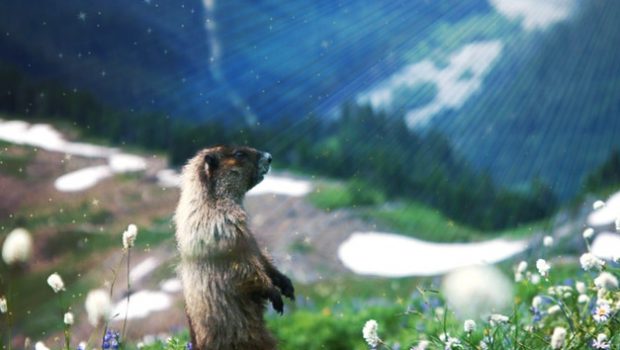
A dazzled looking marmot gazing out on a mountain scene

Once upon a time, there was a marmot named Beatrice. Beatrice was a very special marmot because she had three eyes. You might think this was a useful trait, but it merely triplicated her vision and made everything so blurry she couldn’t hunt. She depended on her boyfriend Reginald for food, and Reginald was a lazy, good-for-nothing loser who usually just brought home roadkill and pretended he’d killed it himself. Beatrice wasn’t stupid, but she was usually too hungry to care.

They lived in a hollowed out tree in the forest. They slept till late in the afternoon, since Reginald was in a marmot rock band and stayed out until all hours of the night. Beatrice didn’t really care for their sound, which was mostly hissing and screeching, accompanied by Bernard, the French import marmot, banging on a rabbit skull. Despite her distaste, she tried to be supportive of Reginald’s creative endeavors.

One day she was sitting in the tree feeling sorry for herself. She felt ugly and freakish because Reginald’s band members had been making fun of her third eye, and she was really hungry because last night’s dinner had been nothing but muddy, rotten frogs. Just as she began crying, there was a poof of green light and a fairy appeared.

Beatrice had always distrusted fairies. She didn’t like the way they pranced around and sang stupid songs about love and flowers, and their clothes were always ragged and rather suggestive. They acted like they were sweet and kind, but she’d heard rumors about them eating human babies and such. Not that she much cared for humans, but eating their young was kind of revolting. This fairy hovered gleefully above her, sprinkling rose petals and glitter in a very annoying manner. A petal got into Beatrice’s mouth and she choked and had to spend several minutes trying to cough it up while the fairy waited patiently, as if she were used to this sort of thing.

“Oh Beatrice,” sighed the fairy in a wispy, sweet voice. “Don’t cry about your third eye, for in it lies more power than you could ever dream of.”

Beatrice said nothing and watched the fairy skeptically. The fairy seemed disappointed in her cautious reaction. She flapped her silvery wings and flew over to Beatrice, touching her third eye.

In a flash, Beatrice could see clearly! And it wasn’t just ordinary sight—she could project some sort of silvery-green light through the third eye. She trained her light beam on the fairy and was about to utter words of gratitude when she saw exactly how froofy the fairy was. Glitter and rose petals? Were those flowers poking out of the tips of her antennae? Those little purple slippers with the curled-up toes were obnoxious, there was no way around that.

“Damn,” thought Beatrice as she examined the fairy. “Get some real shoes already.” Suddenly the fairy plummeted to the ground, and Beatrice saw that the ghastly slippers had disappeared and were replaced by steel-toed combat boots, whose weight her wings could not support. The fairy lay in a bloody heap on the ground.

Beatrice felt momentary remorse, but it was soon overcome by an overwhelming sense of power. Her new light beam could mold reality to her wishes! All she had to do was focus her beam of light, and whatever she desired would happen!

A marmot had never felt so much power.

Beatrice smoothed her fur and left the dead tree for the last time. She marched down to Reginald’s band practice space. There they were, all five of them, making a racket and galloping about like they were God’s gift to rodents. To hell with that, she decided. She fixed her beam on Reginald’s face (he was quite ugly, now that she could really see him) and said, “This is for all the stinking, maggoty possums you brought me!” and Reginald was covered in insects squirming all over his body.

She turned to Bernard. “This is for making fun of people with deformities!” and suddenly Bernard had six arms, none of which worked.

Systematically, she exacted her revenge on each marmot, heedless of their shrieks of terror. When she finished, she walked out of the forest, contemplating how she would take over the world with her new powers. She saw a car approaching on the nearby road. Boldly, she stepped into the road and stood on her hind legs with her mouth open, thinking, “Stop and give me your food!” To her delight, the humans rolled down their windows and squealed, “Oh, how cute!” and dropped peanuts into her waiting mouth. She did this to several more cars until her belly was heavy with rich food.

This was unfortunate because her overloaded gut deadened her senses. She was sadly flattened when she failed to hear a driver approach. Reginald later came along and dragged her body to the band members, where they ate her, consuming her flesh and eradicating the terrible spells she’d put on them. They used her bones for musical instruments and lived out their pathetic, gory marmot lives in infamy.

Therefore, I say to you: never binge on newfound magic powers.

I also say to you: this is based on a true story. There was a marmot in Rocky Mountain National Park that stood in the middle of the road while people dropped food into its mouth. I saw it. Was it using supernatural powers? What do you think? All I can say is don’t feed the wildlife. You might be the unfortunate recipient of magic powers controlled by power-hungry rodents.

0no comment

When Pigeons Get Lawyers

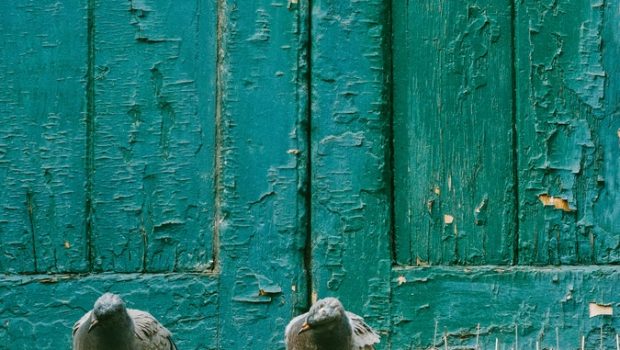
Two pigeons sitting on a window ledge by a weathered shutter


Eunice the pigeon did not live a glamorous life, but she was determined to rise above her dreary roost in the parking garage’s concrete rafters. She didn’t mind the exhaust-filled space or even the laughable “pigeon barriers” around her nest. “What I crave,” she lamented to anyone who’d listen, which in this case was her sister Barbara, “is to create a legacy, a memoir of avian city life and one pigeon’s brave quest to rise above the grit and grime and bring beauty and song to the world.”

Unimpressed, Barbara continued pecking at the cement traffic barrier. “So you want to be a storyteller,” she said. “Big deal. Pigeons have a billion of ‘em. I mean, Mom and Dad never shut up about the huge cicada they caught in ’14. Everyone’s a storyteller.”

“I want to be something different! I want to be … a writer!”

Barbara squinted at her. “What’s a writer?”

“I don’t know, exactly,” admitted Eunice. “But according to the magazine vendors on the corner, writers tell stories and then the stories are distributed all over the world. They tell a story through a particular kind of art called ‘typing.’” She gazed fiercely at her sister. “I will learn this art of typing, and I will be a writer and then all will know the hidden avian story of this city!”

Barbara, engrossed in the tiny pebble she’d dislodged from the cement, ignored her.

Pigeon talons weren’t designed to grip a pen, but fortunately, Eunice was born in the Technological Age and writers need not put pen to paper. That she could neither spell nor read had not yet occurred to her. (Be kind, don’t judge. Pigeon brains are small and Eunice’s was bigger than most). Stealthily observing human writers through the windows of coffee shops and libraries, she learned that “typing” involved smacking the tops of “keys” on a “keyboard.” She watched the humans stare intently at a screen, apparently forming a complex and emotionally gripping thought. Then they’d smack away at the keys, finally printing what appeared to be abstract art composed of  “letters.” Each key, she learned, created one of these small symbols designed to evoke some emotional response from the reader.

“It’s fascinating!” she told Barbara over a meal of rainwater and worms. “The writer creates an idea in his or her head, and through the creation of these abstract symbols, the meaning is conveyed to the reader!  It’s like alchemy, a mysterious process that perhaps not even God understands! Perhaps this is an energetic transmission? A merging of the minds? A melding of auras?”

Barbara stuffed a decapitated worm into her gullet. “What’s an aura?”

Eunice didn’t know, but she continued rather than admit ignorance. “When has art ever been logical?” she cooed. “Is storytelling not an art?”

On a summer evening, she squeezed through a half-open office window and waddled nervously to that godlike engine of creativity: a computer. Hopping from key to key, she coaxed magical symbols to emerge in whatever way pleased her. An “I” there, a Q followed by a YYF. An H here, three nines, and a P, no, a J! Then, moodily, she stared at the creation, only to erase it. It had not properly conveyed the concept she wished to express, which was:
My pigeon life is full of gray
The concrete, my feathers, the hats of heads I poop on
The clouds and smog of this cold city.
I long for color and warmth
If I flew for 40 days and 40 nights, would I end up in Hawaii?
Would I wake up as a Bird of Paradise?

Finally, she arranged the letters in a way that seemed most appropriate. She wasn’t sure what the rules were, but she felt that only one configuration of the mysterious keyboard symbols would convey the anguish of pigeonhood: UHHeLVJ           QPG DKFKKKKKKK1198^

After typing, she gazed critically at her creation. Was there too much white space? Did the repetition of that spiky letter fully express her sentiments of pigeon life? Was concluding with a ^ overkill? She would find a time to revise this stunning masterpiece she called, “Lament of a City Pigeon.”

She showed the poem to Barbara the next afternoon, reciting her creation aloud.  “So …” Barbara puzzled.  “Humans look at UHHeLVJ           QPG DKFKKKKKKK1198^ and just start thinking about pooping on heads and flying to Hawaii and all that stuff you just told me? Just seeing those whatsits … letters…does that?”

“Yes, indeed.”

“So arrangements of letters mean whatever you want them to mean?”

“It’s called art, Barbara!  We poets won’t be bound by rules!”

“Well, how does anyone know what you want them to mean?”

“Poets are psychic.”  It was the only reasonable explanation for poetry.

Barbara shook her head. “I don’t think that’s how it works,” she said, but admitted that she didn’t have a better explanation.

Eventually, as Eunice attempted to publish her poetry, the harsh truth about the world of writing emerged. Not a single publisher took her writing seriously. When a publishing house bothered to respond to her, the letters were rude.* “We don’t have time for jokes in this office,” and “This is a serious literary magazine –please take your tasteless humor elsewhere,” or even “If you truly are a pigeon as you say, you need to get back to soiling car hoods.” Alone in her concrete rafters, she cried bitterly when the seventeenth rejection letter appeared, as it was now undeniable that her second-class status as a pigeon would keep her from ever getting respect as a writer.

Fed up with the stress of city living and the constant rejection of the literary world, she flew to visit her friend Pablo in Los Angeles. A vacation might distract her from the pain.

“Hey Pab,” she said glumly, settling into his swanky roost above the law firm. “How goes the carrier pigeon business?”

“Oh, hey Eunice,” he said, looking up from his citrus-laced martini, removing a mint sprig from his beak. “It’s going well. How’s the writing stint? Barbara said you were going to learn typing or something.” He paused as he looked at her droopy wings and dragging feet. “You look like you could use a drink.” He motioned toward the rooftop bar.

“I’m a failure,” she sighed. “I keep sending in my deepest heartfelt writing for publication. I know it’s good, but no one will publish my writing because I’m a pigeon.”

Pablo stopped, his martini halfway to his beak.** “Really?” he asked, suddenly very interested. “Is that what they said? Because you’re a pigeon?”

“Well, yes,” she said, and shared the litany of angry anti-pigeon rejections, concluding with the dreadful “soiling car hoods” insult.

“And you saved the letters?”

“Of course,” she said. “Don’t all great writers save their rejection letters to laugh at once they’re famous? I should use them to line my nest. I’ll never be famous or even noteworthy.”

If Pablo had been born with lips, he would have been grinning.  “I think you’ll soon be both, dear. You see, publishers aren’t supposed to discriminate against writers due to race, age, sexual orientation, nationality, etc.”

“They’re not?”

“No, they aren’t. Oh, they do. of course. But they are seldom foolish enough to say it so boldly, and in writing, as they did to you. And while discrimination against species isn’t expressly mentioned in most anti-discrimination laws, I think there’s a precedent. We have a very strong case, Eunice. Don’t you worry.  ‘Lament of a City Pigeon’ will be published in the finest literary magazines imaginable.”

Pablo was right. It was. After the court case***, Eunice became the first Avian Poet to grace the cover of The New Yorker, along with rave reviews of her touching poem. Irritatingly, the humans couldn’t seem to figure out what the poem was about, but they agreed that it was tragic, absolutely tragic.

And that is how pigeons learned to be litigious and crap wherever they please, how poetry magazines became incomprehensible, and why I have to write extremely carefully or risk the wrath of an interspecies advocacy group. Libel suits are real, and pigeons have eons worth of resentment over those spiky things in parking garages and high-rise windows, not to mention fake owls on roofs. No matter how tempting, never ridicule Avian art.

* “But how could a pigeon read rejection letters–”
** “But how could a pigeon hold a mar–”
*** “But how could a pigeon possibly communicate in a court of–”
It’s called suspension of disbelief, readers!  Start suspending!
0no comment

Dorcas the Squirrel and the Quest to Kill Mother Nature

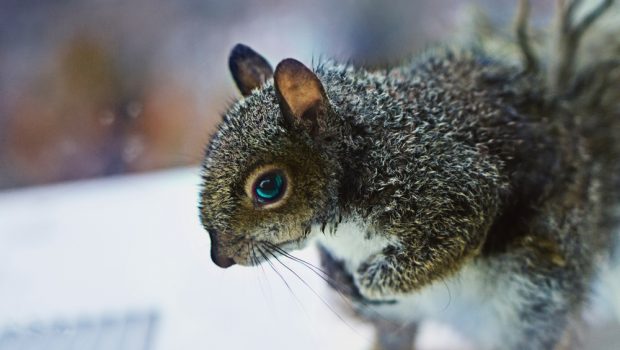
Very cold-looking squirrel

Ever notice how so many Splarks stories feature downtrodden scapegoats who eventually transcend their handicaps? Inspiring with its can-do attitude, Splarks brings you tales of optimism and personal revelation…except for this story about Dorcas the Squirrel.

Dorcas means “gazelle” in Greek. It was an odd choice of name for a squirrel, given that the little rodents are are short and stocky with none of the long-legged gracefulness of a gazelle. But Dorcas didn’t care.  She was the squirrel equivalent of the alpha bitch in your high school. You know that girl who was always dropping hundreds of dollars on haircuts and highlights? In squirrel terms, this meant that Dorcas had the glossiest fur you’ve ever seen on a squirrel. Remember that girl who lived in the ritziest house in town because her dad was a celebrity attorney, and she mentioned this fact whenever possible? Dorcas’s dad lived in the tallest oak tree in the meadow, and it produced the largest acorns ever. However, Dorcas, concerned about weight gain, refused to eat them.

“Dorcas,” her mom scolded, “you need to eat! Winter is coming and if you haven’t fattened up you’ll starve to death.”

Dorcas rolled her eyes. It was her mother’s seventh “You’re Gonna Die!” speech of the week. “Whatever, Mom. Nobody likes a fat squirrel.”

Dorcas was tragically misinformed. Various internet memes prove that fat squirrels are universally lauded as adorable. Chubby little squirrel cheeks and fat white squirrel bellies adorn greeting cards everywhere. Pudgy squirrels are so popular that people buy squirrel feeder kits to make sure they stay fat and warm in winter.

But Dorcas was young and had not yet experienced a winter. Her mother spoke of Mother Nature throwing cold whiteness from the skies, shriveling the leaves on the trees and turning the creeks hard. Food would not grow, she said, and the world would grow cold.

Dorcas thought this was a load of hooey. “That’s retarded,” she snorted.

“Dorcas! That’s not a politically correct word!” Her mother worked with mentally challenged rodent babies and disapproved of such language. “I’m warning you: don’t doubt Mother Nature’s wisdom. Eat!”

But Dorcas had already flounced off to her drey, which is squirrel-terminology for “nest.” Little did she know of the travails she would soon face.

And here, I have two choices. I can take the J.R.R. Tolkien approach to travails and write 80 pages of “And the small brown squirrel trudged the deep snow. For days she did not eat for there was no food to be found, and her belly grumbled and her step grew weak.” My other option is to summarize in an Ernest Hemingway style, such as “Winter came. Snow fell. No nuts grew on the tree. She thought of the summers in France.” Because this is somewhat of a Choose-Your-Own-Adventure story, you get to pick and imagine that I wrote whatever you prefer.

When spring came again, just as her mother said it would, Dorcas shakily exited her squalid nest. She ate all that she could find and reflected on her ordeal. Her mother had been correct about the cruelty of this “Mother Nature.”

This must not happen again. Mother Nature must be stopped!

For the first time in her life, Dorcas had a purpose beyond ridiculing squirrels with less shiny fur, talking to boys, and being skinny. She had a new goal: to seek revenge on Mother Nature! She collected sticks and sharpened them with her teeth. She scoured the forest floors for poisonous plants. She learned judo and created a garrote from the spines of weeds. She would teach Mother Nature a lesson about killing off food unnecessarily!

And here, I would like to tell you that Dorcas eventually found Mother Nature, learned about the cycle of the seasons, and came to peace with the necessity of eating and the regenerative purpose of winter.

But you must know Splarks better than that by now.

Intent on destroying Mother Nature, Dorcas roamed the countryside for a few days in righteous anger. However, her rage quickly dissipated when she found a group of young squirrels who lived behind a moonshine farm. They partied incessantly and Dorcas soon lost her purpose in a frenzy of binge drinking and casual sex. Squirrel experts may frown and point out the solitary nature of squirrels, and suggest that they do not “party” together. But Dorcas and her friends were trend-setters, refusing to conform to outdated assumptions of squirrel behavior.

Five months later she was mother of a noisy brood of baby squirrels, whose father had conveniently dumped her for some stupid red-furred squirrel two counties away. Dorcas was fat, miserable, and winter was approaching yet again. Mother Nature was still not dead. Dorcas had failed in her quest.

Clinging to the last sad scrap of her great mission in life, Dorcas felt there was no other option but to kill herself. She dropped off her children with the babysitter then went to the nearest country road. When the next rumbling metal beast appeared, she leaped in front of it, dying instantly. A nearby crow rejoiced over her tasty corpse.

But the problem with squirrel suicide is that death is a sacred transition between this world and the next. When a squirrel enters the afterlife in a despondent, angry, or otherwise rotten state, these unresolved emotions cause the unfortunate squirrel to wander hopelessly until luck intervenes or until Mother Nature takes pity and rescues him or her.

Do you think Mother Nature was going to rescue Dorcas? Hell no! Mother Nature was not inclined to assist the murderous, particularly when the object of the murderous desire was Mother Nature herself. And so Dorcas wandered the forest for eternity. She haunted her living peers and frightened hikers with her ghostly interludes. Always, always she longed for just one acorn.

It is a tragic tale, isn’t it? If only Dorcas had eaten the acorns as her mother wished! If only she hadn’t been such a bitch to Mother Nature! If only she had migrated to Florida for the winter! If only she had chosen to live!

But you see, Dorcas was strangely happy in her new state.

Deep down, she was arrogant and disrespectful and loved making people feel bad. Therefore, what could be more fun than frightening people for all eternity, watching them cower in fear before her ghostly apparition?

I’ll tell you what: nothing.

Haunting was her most joyous activity, and oh, how she enjoyed it! Winter’s chill could not touch her. And best of all, she never had to eat another nut again. Sure, she longed for them, but that was because she wished she could throw them at unsuspecting hikers. She had truly made the most of her situation, and no other squirrel was so happy in a phantom existence.

THE END

***

Interesting squirrel fact: The Ratufa is a giant squirrel that can grow to 3 feet in length. Given that the squirrels sometimes throw nuts at me when I’m hiking, I shudder to think of this thing.

0no comment

Top Ten Reasons Why I Stopped Writing Stories and Started Making Lists

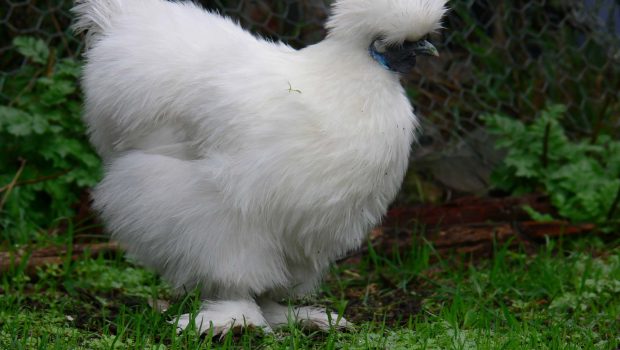
A chicken so fluffy that it looks fake, but it isn't

Bloggers and journalists insist that people love to read lists.  Will Splarks ever succumb to the unending List-o-philia that refuses to die?

Well … you’ll notice that in my title, dear readers, that I said I’d explain the top ten reasons for why I stopped writing stories and making lists.

This is a dreadfully sinful LIE.

1. Once upon a time, there was a chicken. It danced in the moonlight. (Go on, you might as well check out List Item #2; it may be relevant)

2. It attracted some nearby gorillas.

3. The gorillas, being more powerful than the chicken, considered biting its head off and consuming it for a snack.

4. Then they realized that they’d have to fight each other for the chicken–there wasn’t enough for all of them.

5. Given that fighting is a pain in the ass, and lying in the grass scratching one’s butt is easier, they decided to ignore the chicken.

6. The chicken continued its avian ballet, unaware of its brush with death.

7. A clever reader asked, “Why exactly would a chicken dance in the moonlight? Wouldn’t it be in a coop somewhere?  And chickens don’t really dance, do they?”

8. The author, in the interest of artistic expression for fowl (won’t somebody please think of the chickens?), had to clobber the reader, duct-tape their mouth shut, and shove them in a closet.

9. The chicken, frightened by the unexpected clobbering noise, fled the scene.

10. The gorillas cried, for they had been enjoying the graceful dance of the chicken.

11. The sun rose mournfully in a cold gray sky over an empty field. A mime dropped a rose.

12. This story became a film and won awards at the Sundance festival because of its innovation and embodiment of all the qualities of a good independent film.

13. The author’s readers sent hate mail because not only had the author subjected them to a stupid story that mercilessly consumed a tiny portion of their lives, but because the author had also lied about the number of list items. Also, the film was totally different from the story and that was like, a total sell out.

14. Devastated by the harsh words, the author jumped off a bridge.

15. The author’s spirit woke up in a world where happy rainbow unicorns pranced about. Nice flower fairies made her a princess outfit out of rose petals. She was satisfied by hearing the sad thoughts of those who sent the mean letters: “I’m really sorry now that she is dead. It’s all my fault that she killed herself. I am truly a pathetic excuse for a human being.”

16. All the mean people felt so bad that they killed themselves, too. They showed up in the afterlife alongside the author.

17. Forced to accommodate the influx of contrite people, the rainbow unicorns left her to fend for themselves. The flower fairies made everyone else princess outfits, too. The mean people, feeling better about themselves now that they were princesses, went back to writing hate mail and leaving it where the author could find it.

18. There is no happy ending to this story. The moral is: don’t think “they’ll be sorry when I’m dead!” and kill yourself, because they might feel so sorry about it all that they’ll kill themselves, too, and then they’ll be there to annoy you for all eternity. Defiantly keep on writing pointless stories simply to amuse yourself. You can buy princess outfits at the costume store, anyway. It’s not like flower fairies have a monopoly on the costume industry.

THE END

0no comment

Splarks Hypothetical Press: Your Source of Eminently Pukable Writing

Recently I went through the Writer’s Market, the famous directory of magazines and newspapers accepting freelance submissions. It was…educational. In case Splarks.com ever becomes an independent small press, I’ve drafted listing in the Writer’s Market.  

Email: [email protected].

We review unsolicited submissions quarterly. During these times, we crowd into our hip, overpriced loft office and feast on trendy takeout and wine from a country you probably can’t identify on a map. We read your submission aloud and point out all your editing errors. If we can’t find any, we’ll make some up so that everyone else in the room will admire our sharp eye. Then we will denounce your work as loathsome tripe and invent derogatory terms to apply to your writing technique. On slower months, we go to the rooftop garden and bring an easel and charcoal pencils. We then sketch the loser we imagine you are, based on your banal attempts at writing. Invariably, your portrait will resemble a crazy cat lady, a dour parking lot attendant, or creepy children’s television show host. Finally, we will build a little fire in our sink or the rooftop fire pit and ceremoniously toss in the crumpled pages of your manuscript, evoking the ghost of James Joyce as we do so.

Nonfiction: We love confessionals and memoirs, as they help us further analyze your pathetic approach to living. We are particularly interested in your failure of a love life, high school trauma from which you have not yet recovered, and your quaint loss of religious faith. We love hearing about the Self as a Lame Stereotype, which is likely all you’re capable of writing.

Fiction: Send us genre fiction with the hero or heroine thinly disguised as you. Please spell “heroine” wrong; it amuses us. Unlike those other literary magazines that claim to accept only the best contemporary fiction, we take only crap since no one can write well, except for us. Go on, send us your hackneyed blathering.

Poetry: Please don’t send rhyming poetry typical of greeting cards–it’s too easy to criticize. Challenge us! Try to really touch our non-existent hearts and make us feel something. That’s always so precious.

Tips: Don’t query us about the status of your manuscript or ask when the next issue will be published. Please refer back to this entry for the answers, which are “We burned it in the sink, and then Pablo drunkenly puked on the ashes,” or “As nothing meets our standards for quality literature, the journal will not be published. Again.”

(Okay, okay, Splarks would never be so harsh, though some publishers in the Writer’s Market might be.  Did read see all that stuff we’d have to do?  That’s a lot of work.  We would read your submission, then send you a thank you note and a reminder that we are far too lazy to have a publishing company.  We’d also never evoke the ghost of James Joyce because then we would have to tell him how much we loathed Portrait of the Artist as a Young Man in high school, which we chose from the teacher’s selection because it was the shortest volume and we regretted our choice very much.  Apparently, the memory of this choice caused us to start speaking in the third person. Royal We are sorry about that.) 

0no comment

Bio-elegance

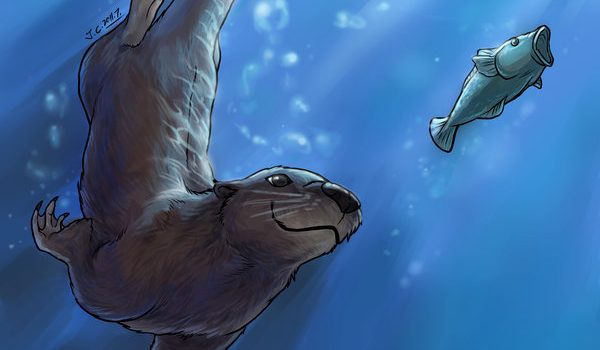
Drawing of smiling otter chasing a fish through the water. The fish is definitely not smiling back.

The microbial children squealed as the otter submarine torpedoed through the river. Older members of the bacterial colony were perhaps more sedate, but no less enthused with the practiced tumbles and breakneck twirls of their new host. Most of them couldn’t recall when they’d last been on a pleasure cruise rather than a mission. The Colony Elders had mulled it carefully, approving the expedition on grounds that the community had suffered so much recently from chemical ravages and fierce herbal destroyers. The war had been misery for all, but especially those who had faced the genocide of the xenophobic White Blood Cell Armies.

But the Colony, even the children, was well-prepared for the fierce reaction of the WBCA. They’d sacrificed individual after individual as part of the greater strategy of takeover, reproducing even when resources were low and morale was flattened. All Colonials upheld the sacred mission of their Colony: No Waste. Each of them existed to use biological resources that would otherwise go to waste in senseless, foolish beasts. They were stewards of the natural world and wanderers who would go wherever they were needed.

The Colony had won the battle called Martha, though she didn’t know it yet. As customary, the Colony retreated momentarily out of respect for the defeated. The elders had performed the Division and Passing ceremony but instead of the Eighty Days of Silence, the elders suggested a pleasure cruise to celebrate the impending end of the Long War of Martha Murphy.

The underwater world swished through the otter’s fur, brilliant blues and greens illuminated by the midday sun. The children shrieked to see massive fish mauled by the still more massive teeth of the otter, and the adults watched contentedly, enjoying the show of light and shape.

“Will we live here now?” asked a little one, hopeful and trembling.

“No, we’ll go back to Martha soon,” someone said.

“But I like the otter! And anyway, Martha hates us!”

“Why is that bad?” said an Elder. The child had no answer, and settled at the massive eye portal to watch and consider this. As every Colonial child learns eventually, first to its shame and then to its credit, hatred is a sign of a job well done and bio-matter elegantly used.

(Inspired by Robyn Hitchcock’s “I Often Dream of Trains”)

——

I have a cold and was wondering infectious diseases–especially the kind that seem like they just keep coming back– might be like from the bacteria’s perspective. I’m sure they don’t just sit around rubbing their pseudopods together in fervent delight at making me ill.  If they have a sense of purpose, what would it be?  Surely it would be more than “Woo-hoo, we be makin’ humans feel like crap!”

Poor Martha.  She can rest assured that if she keels over dead, at least the little bastards will be homeless again.

I’m actually not a fan of Robyn Hitchcock ordinarily, but this song has a strange otherworldly feel to it–the kind of feeling I associate with being feverish in a pleasant place.  The world is charming with flowers blooming outside your window or people swimming by on a shining summer day, and you’re wobbling on your feet and walking on the ocean floor.

Photo Credit: Great little drawing, isn’t it?  It is by deviantARTist *J-C, who kindly let me use it.   I love otters.  Recently I saw one in the Monterey Bay, a mama sea otter swimming with her baby on her belly.


0no comment

The Indulgence of Childhood

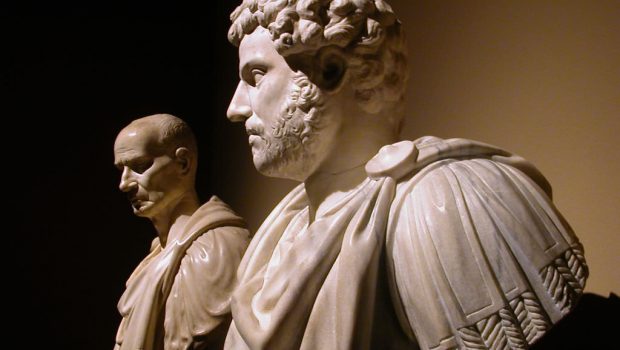
Picture of two ancient Roman men in marble sculpture

Listen to us and cease weeping. We granted you one small indulgence because you wanted to know love. Initially, we refused your request, but your persistence moved us. We froze everything that you were and put your magnificence and brilliance on hold so you could sip her kisses and feast on the gleam in her passionate eye. This small human meant more to you than all else. Very well, we said. We pitied you. Out here, you are very powerful. Very big. Love is as irrelevant here as hyphens and party hats. Perhaps you needed a short diversion.

Now that you have returned, you must open your eyes and remember your vastness and power. We wait for you to turn back to the whirling universe and the dimensional towers, but instead, you close your eyes again and slide through a crack of memory. You steal around to the back steps where she dropped a love letter she hadn’t expected you to find, and remember how it felt to furtively hold her as she traced the lines in your face. You were big there, too, with armies and entourages.

We agree: it would be a shame to forget this time, this … childhood. But you must remember that you are grown now. You have responsibilities; the towers grow cold without you.

***

Musical Inspirations: the entire Bat For Lashes album “Two Suns” and a very sad dream I had.  Bat for Lashes makes me think and feel at the same time.  Simple words, but it’s actually high praise for music, which tends to fall in one camp or the other.

Photo “Roman Marbles in the Prado” by Tasitch.

0no comment

When We Were Rockstars

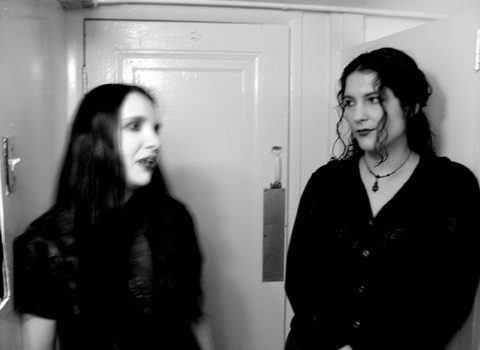
Two girls in black talking

After a too-long night of pulsing bass and flashing strobes, I weave with Dan and Jason through grimy streets until we reach the river, which is made clean by shadows and moonlight. The wind whips my torn chiffon dress and I perch on the pier’s edge. For no reason, I recall a fourth-grade history class in which I ignored the teacher and drew a drop of water divided into small squares, each reflecting the same pencil squiggle. In clumsy cursive I wrote, “All the passages of time are packed into one small plane in the sky, the beginning, the end, before and after. We all live those horrifying and joyful times over and over for each second and split second. One person representing yourself in each moment is actually a very different person. The future for you is the distant past for another and you think you have one life, but you live forever, being born to dying. It lingers forever.”

(forgive a small girl’s grammar, for she had not yet assimilated into the crushing world of literature)

The boys talk about classic post-punk and the breeze shakes off the stench of a hundred cigarettes and everyone’s spilled cheap vodka. Dan’s studded leather jacket and the river’s waves catch the same fragment of moonlight. So cold at the river–which here in this arid land is really only a creek–flowing through a muffled stream of quiet time-space.

This is the end of something I can’t quite comprehend, like a tickle in my mind and a dragon nipping at my heels.

***
Music inspiration for this piece: Sonic Youth’s “JC.”  I showed this to someone and they wanted to know if I had really written that passage in the fourth grade. Yes, I did. I still have it. Also, the photo is courtesy of Susan Thomas, who shot this years ago. That’s me on the right, and Chris on the left.
0no comment